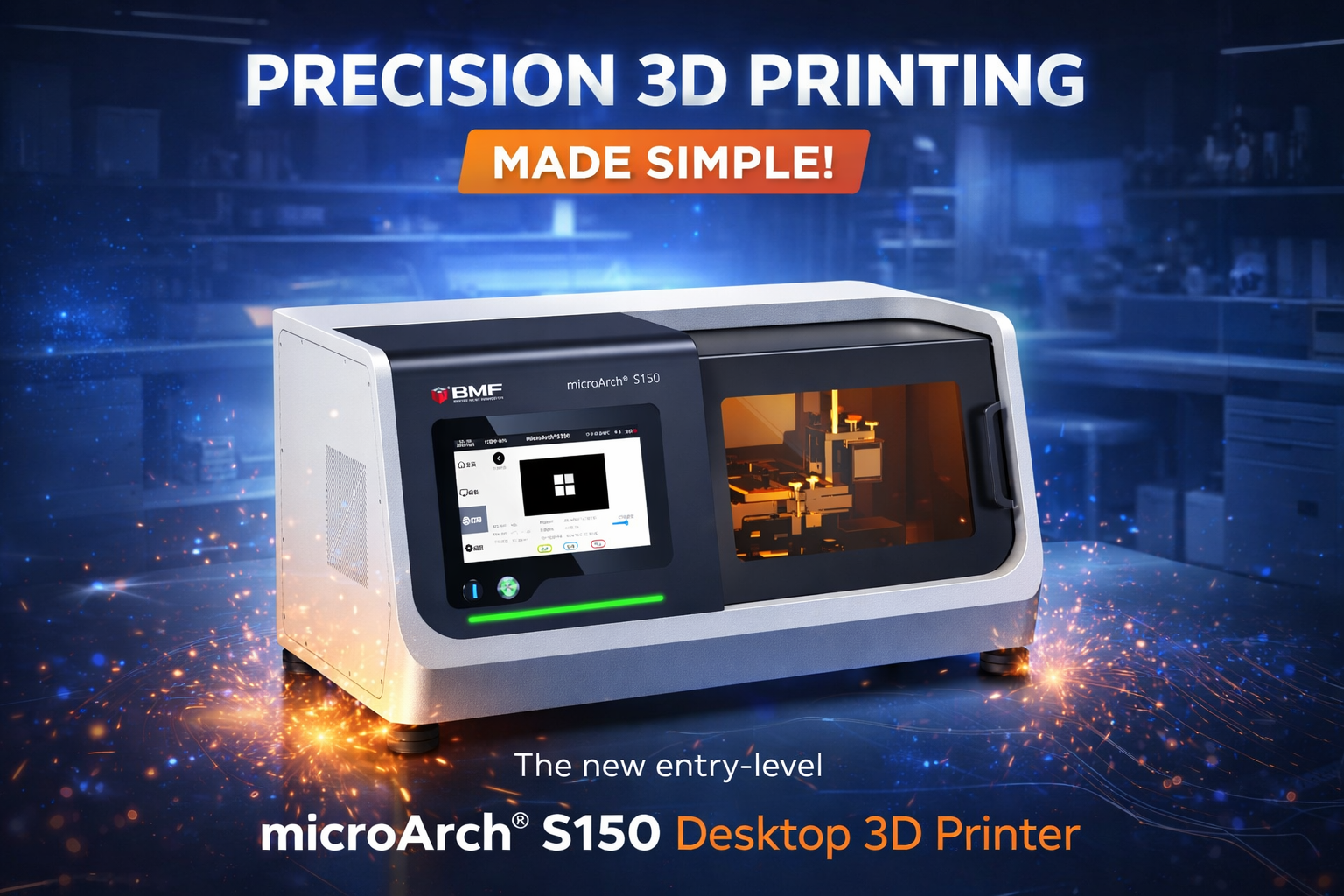
Introducing the BMF microArch® S150

A New Entry-Level High-Precision Desktop 3D Printer Now Available in Australia & New Zealand

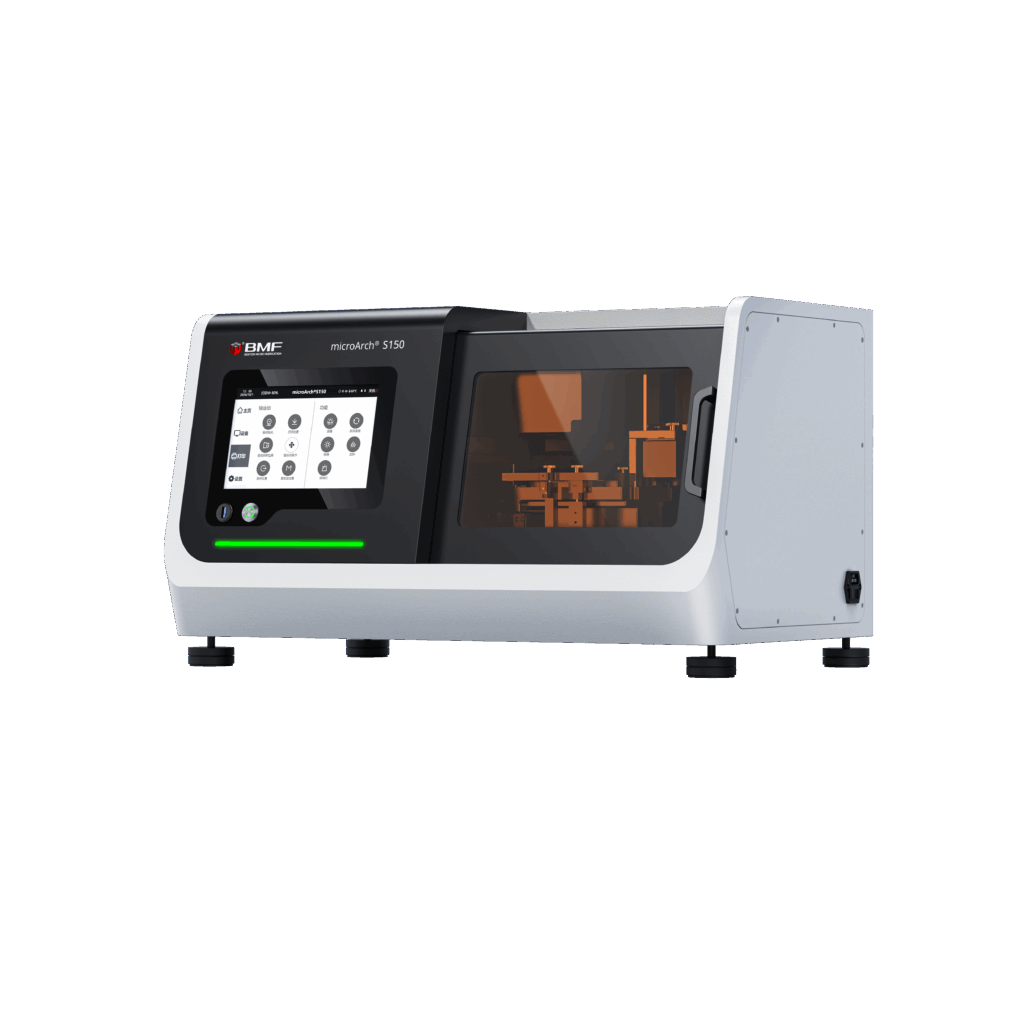
Emlogic now offers the new microArch® S150 to customers across Australia and New Zealand, providing researchers, engineers, and product developers with a practical entry point into micro-scale additive manufacturing.

Ultra-high-resolution additive manufacturing is no longer limited to large industrial systems. The microArch® S150 brings BMF’s micro-precision 3D printing technology into a compact, easy-to-use desktop platform. Built on BMF’s Projection Micro Stereolithography (PµSL) technology, the S150 enables extremely fine feature fabrication and excellent surface quality, making it ideal for applications where precision matters most.
Key Features

Micro-Scale Precision
The microArch® S150 delivers outstanding printing resolution and dimensional accuracy, enabling the fabrication of intricate micro-structures that are difficult or impossible to produce using conventional manufacturing methods. This capability makes the system particularly suitable for applications such as microfluidics, biomedical devices, precision engineering components, and research prototypes.

Multi-Material Capability
The system supports a variety of advanced materials, including high-performance resins, ceramic-based materials, and hydrogels. This flexibility allows users to explore a wide range of applications across engineering, medical research, and micro-device development.

Simple and Intuitive Operation
The S150 is designed with usability in mind. Pre-configured printing parameters for commonly used BMF materials are already stored in the system, allowing users to start printing quickly with minimal setup. In many cases, the process can be as simple as loading the file and starting the job.

Low Maintenance Requirements
The printer is engineered for reliable day-to-day operation with minimal maintenance. Its compact and robust design makes it suitable for laboratories, R&D environments, and engineering offices.

Local Support from Emlogic

When purchasing the microArch® S150 through Emlogic, customers benefit from comprehensive local support, including:

  • Professional installation and system setup
  • Operator training for your team
  • Ongoing technical support and application guidance
  • Fast response from our Australia-based engineering team

Application Cases
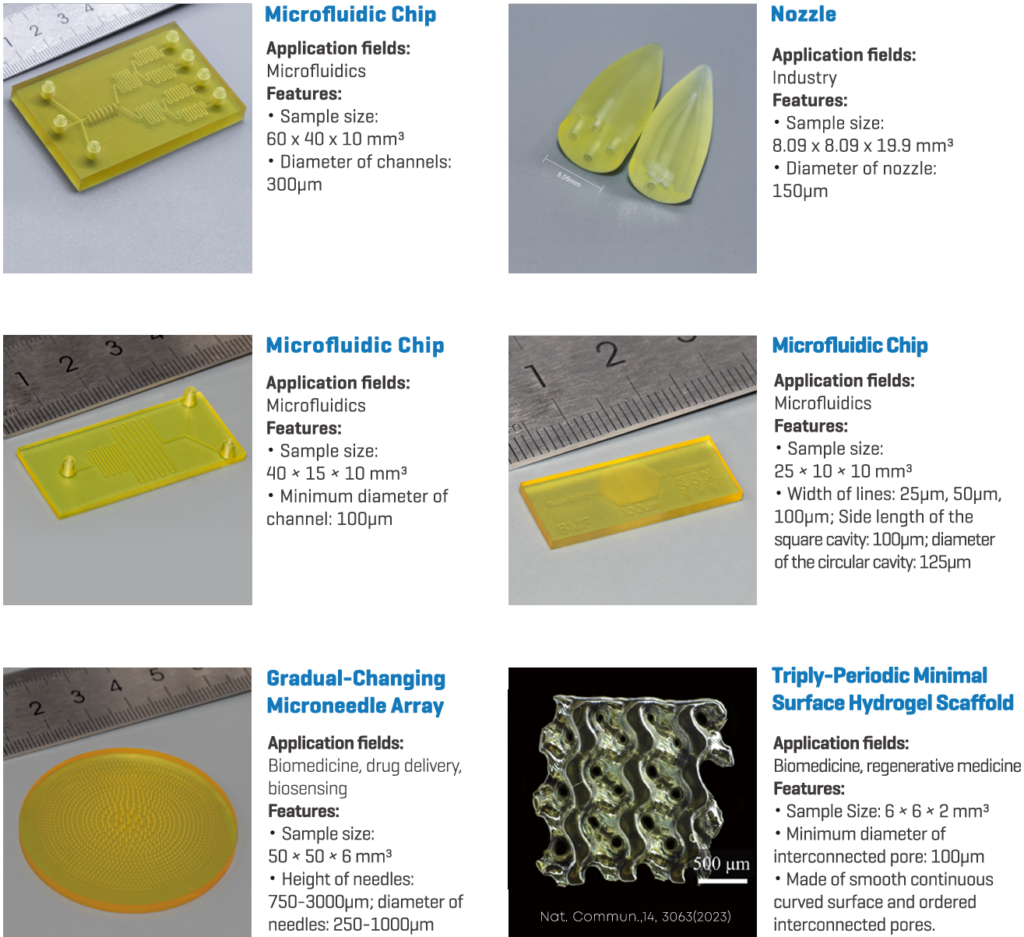
We provide pre-sales consultation, validation printing trials, and after-sales technical support across Australia and New Zealand.

4D Printing

Multimaterial 3D Printing Technology

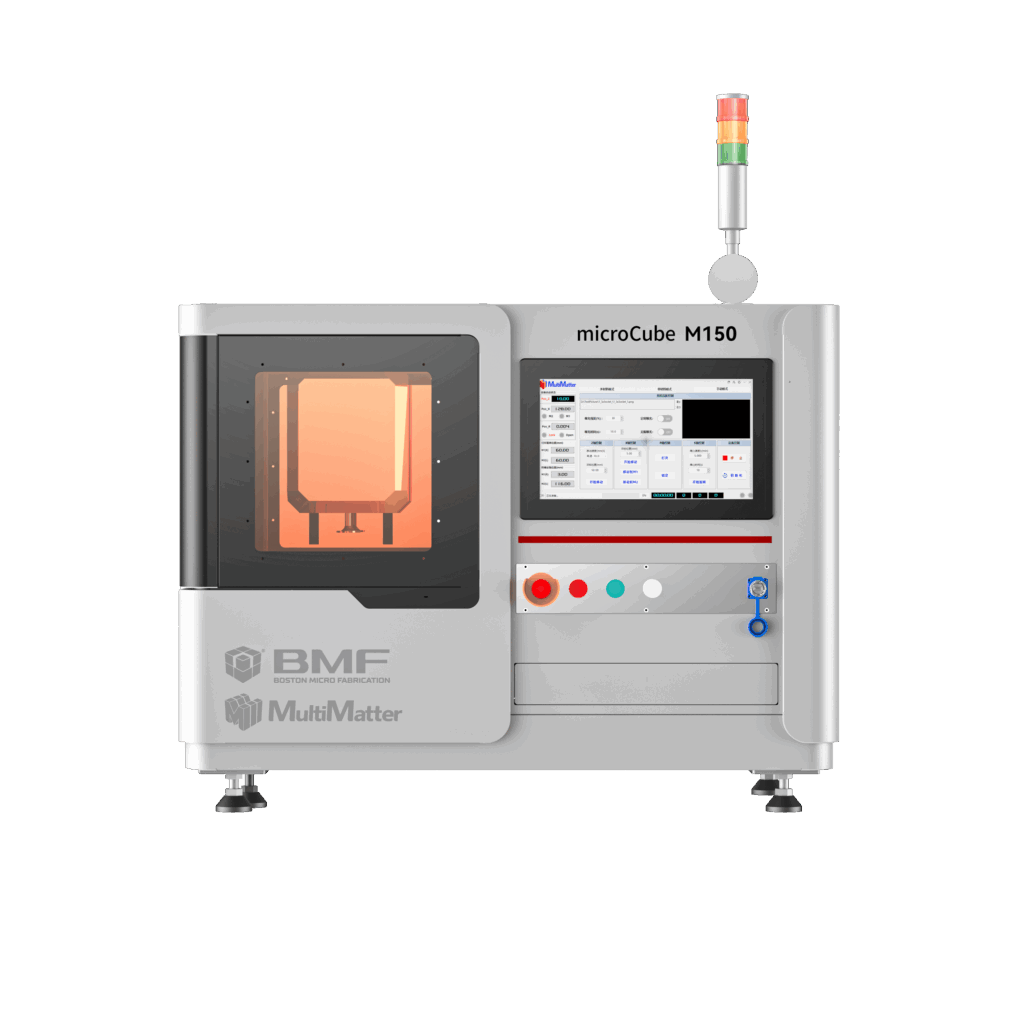
Based on DLP technology, the new BMF 4D printer, microCube M150 / M150E, employs a centrifugal cleaning process during material transitions, allowing true multimaterial printing inside a single layer as well as from one layer to the next.

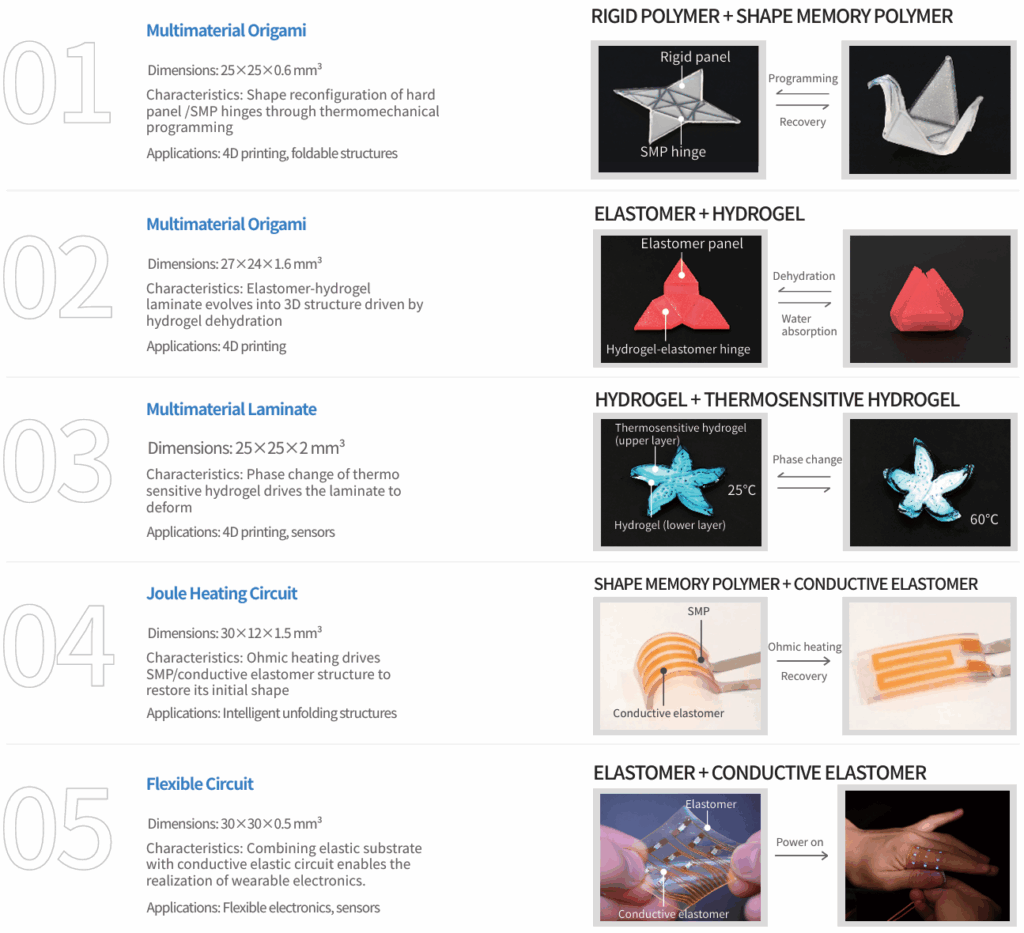
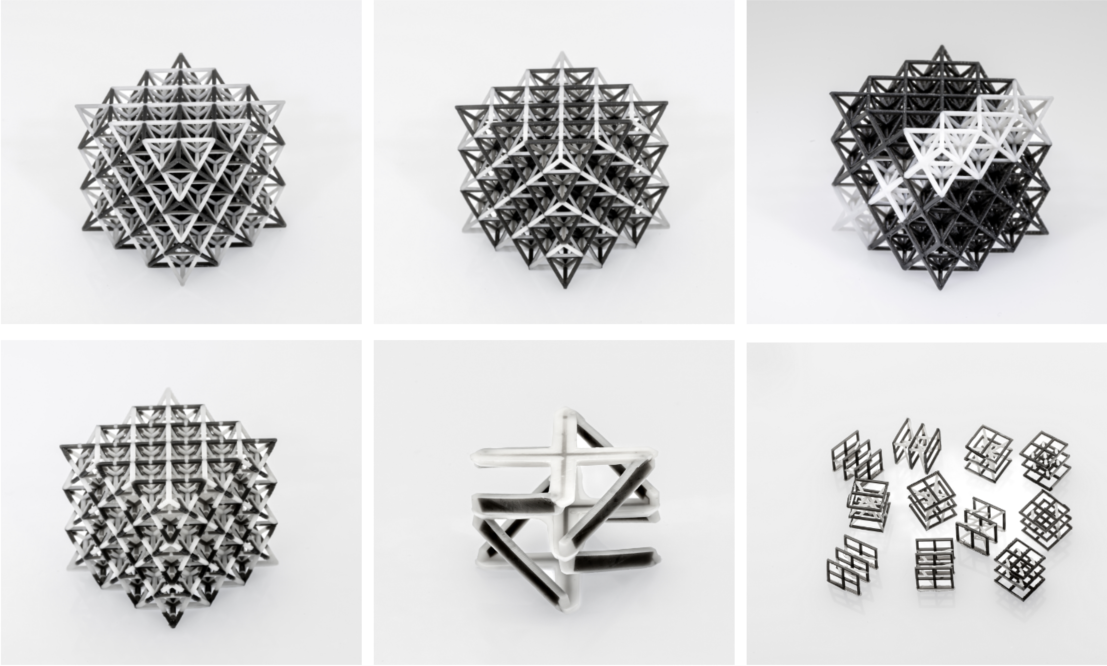
This multimaterial 4D vat-photopolymerization printer enables the fabrication of complex structures from a broad range of functional materials – including shape-memory polymers, conductive elastomers, hydrogels, and rigid resins – supporting advanced performance and actuation capabilities. It delivers high-precision printing with a 25 µm optical resolution and offers flexible build volumes of Ø42 mm or Ø56 mm at 30 mm height, making it ideal for miniature components, smart devices, and multi-property prototypes.

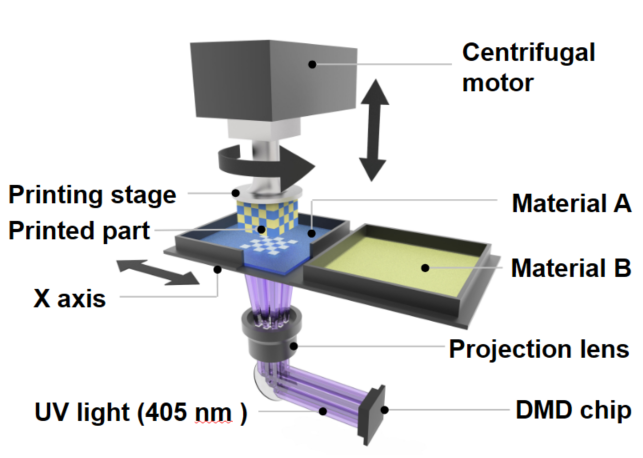
The printer uses 405 nm UV light projected upward from beneath the resin surface to selectively cure functional materials. During material changes, high-speed centrifugal force rapidly removes uncured resin from the printed part, allowing fast and clean transitions between different vats (as shown in the schematic diagram, left). Layer by layer, this process enables the fabrication of fully integrated structures featuring high complexity, high precision, and multiple functional materials. The machine can be equipped with up to four different material vats for printing.

Local Support from Emlogic

When purchasing the microCube M150/M150E through Emlogic, customers benefit from comprehensive local support, including:

  • Professional installation and system setup
  • Operator training for your team
  • Ongoing technical support and application guidance
  • Fast response from our Australia-based engineering team

Application Cases
Related Papers

  1. Rong Wang, Chao Yuan, Jianxiang Cheng. et al., Direct 4D printing of ceramics driven by hydrogel dehydration. Nature Communications, 15, 758 (2024)
  2. Honggeng Li, Biao Zhang, Haitao Ye, et al., Reconfigurable 4D printing via mechanically robust covalent adaptable network shape memory polymer. Science Advances, 10, eadl4387(2024)
  3. Xiangnan He, Biao Zhang, Qingjiang Liu, et al., Highly conductive and stretchable nanostructured ionogels for 3D printing capacitive sensors with superior performance. Nature Communications, 15, 6431 (2024)
  4. Caicong Li, Jianxiang Cheng, Yunfeng He, et al., Polyelectrolyte elastomer-based ionotronic sensors with multi-mode sensing capabilities via multi-material 3D printing. Nature Communications, 14, 4853 (2023)
  5. Qi Ge, Zhe Chen, Jianxiang Cheng. et al., 3D printing of highly stretchable hydrogel with diverse UV curable polymers.Science Advances, 7,eaba4261(2021)
  6. Jianxiang Cheng, Rong Wang, Zechu Sun, et al.,Centrifugal multimaterial 3D printing of multifunctional heterogeneous objects. Nature Communications, 13, 7931 (2022)
  7. Biao Zhang, Honggeng Li, Jianxiang Cheng, et al., Mechanically Robust and UV-Curable Shape-Memory Polymers for Digital Light Processing Based 4D Printing. Adv. Mater. , 33, 27, 2101298 (2021)
  8. Xiangnan HeJianxiang ChengZhenqing Li, et al., Multimaterial Three-Dimensional Printing of Ultraviolet-Curable Ionic Conductive Elastomers with Diverse Polymers for Multifunctional Flexible Electronics.
    ACS Appl. Mater. Interfaces, 15, 2, 3455‒3466(2023)

We provide pre-sales consultation, validation printing trials, and after-sales technical support across Australia and New Zealand.